Ver:

Antelope Valley

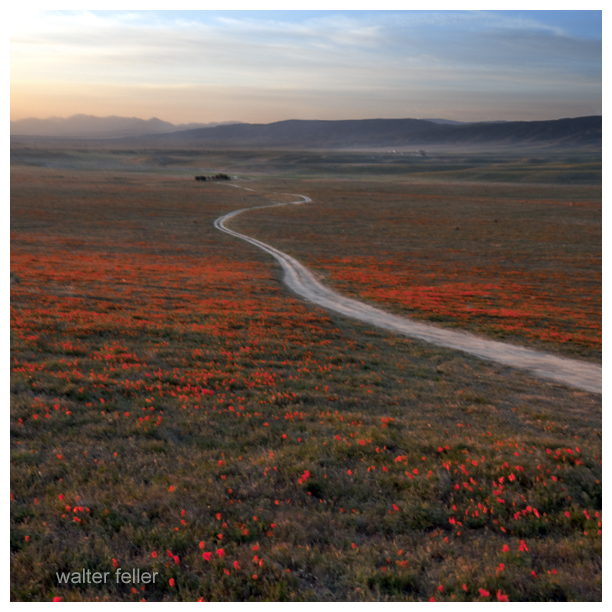
Beautiful memories of beautiful moments — I was there the day the valley floor was being painted. Each brushstroke was evenly pulled across the plain as the sun rose and the day grew warm. The colors covered everything with life. There were bugs and brightly detailed butterflies and the creatures that eat them. There were the diminutive blue and pink fairies that made it all worth living for and meek mice, humble hares (although no one seems to remember one in particular), rats underground and birds that flew higher than could be seen, and then there were the birds that flew in between.

Rats. Rats were everywhere–typically.

Ver (Latin)- very, new, truth, life, forward . . .
‘verdant’ meaning green and growing and ‘veritas’ or truth.

24 Consider the ravens: They do not sow or reap, they have no storeroom or barn, yet God feeds them. And how much more valuable you are than birds! 25 Who of you by worrying can add a single hour to your life? 26 Since you cannot do this very little thing, why do you worry about the rest?
— luke 12:24-26
Illustrator of Mojave Desert flora

Henry R. Mockle (1905-1981),
Illustrator of Mojave Desert flora

Rather than documenting the structure of each plant species in scientific detail, Henry Mockle intended his illustrations to capture “the pleasurable feeling at coming up on one of these little creations”.

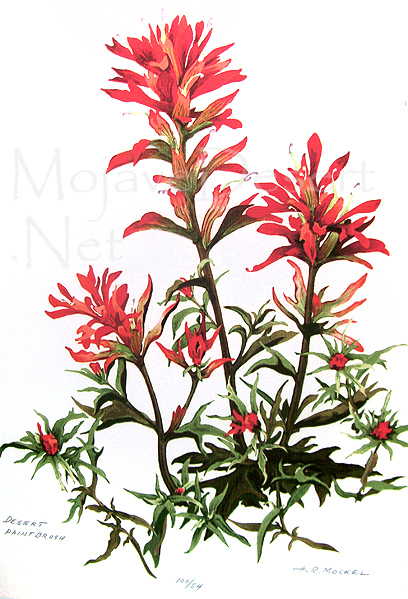
Henry Mockle painting of desert Indian paintbrush
Paintbrush

As did naturalist Edmund Jaeger, Mockle took pride in all his studies of desert plants being taken directly from life. This work often involves lying on the ground for hours, in conditions ranging from hot to cold, windy to wet. As some annual plants – like the Phacelia – per growing up and through the protective spread of woody shrubs. Mockle found he had to lay beneath creosote bushes and other scrub vegetation to depict these wildflowers in full.

Mockel settled in the Mojave in 1958, first at Calico and then in Twentynine Palms. He studied desert plants in the field for about fourteen years and made precise watercolors, scratchboard drawings, and color serigraphs. His work concentrated especially on the low deserts and Mojave flora.

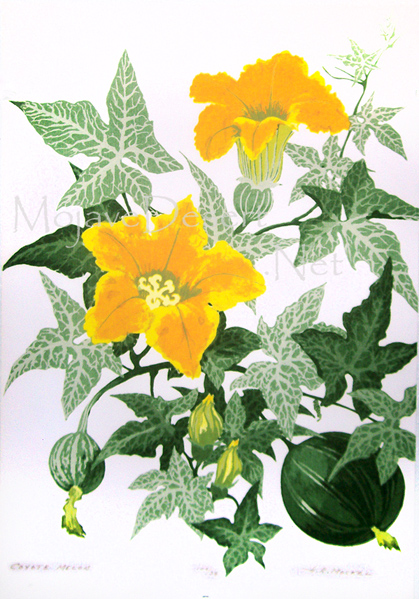
Henry Mockle painting of coyote melon
Coyote melon

With his wife, Beverly, he published Mockel’s Desert Flower Notebook in 1971: a 314-page guide with illustrations, photographs, and descriptions of 133 desert plants. The writing was deliberately plain rather than technical.

His serigraphs were painstaking color screen prints; some required as many as 45 separate printings. He drew only from live plants and reportedly did not cut the specimens he studied.

The Hunt Institute holds numerous Mockel works, including desert catalpa, desert mallow, brittle-bush, Dudleya saxosa, Calico cactus, Mojave mound cactus, and Mojave yucca. Its records identify the media, editions, and botanical subjects.

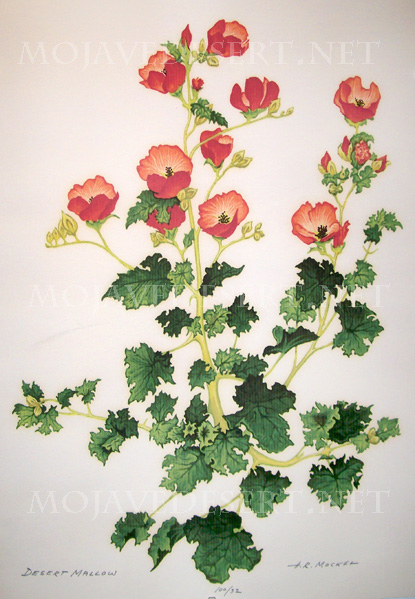
Painting of desert mallow
Desert Mallow

He also wrote five Desert Magazine articles between 1961 and 1965. The first flower he painted in the desert was reportedly from Mule Canyon in the Calico Mountains. Joshua Tree National Park includes a self-portrait of Mockel at work in its People of the Desert exhibit.


Source: Riverside Metropolitan Museum